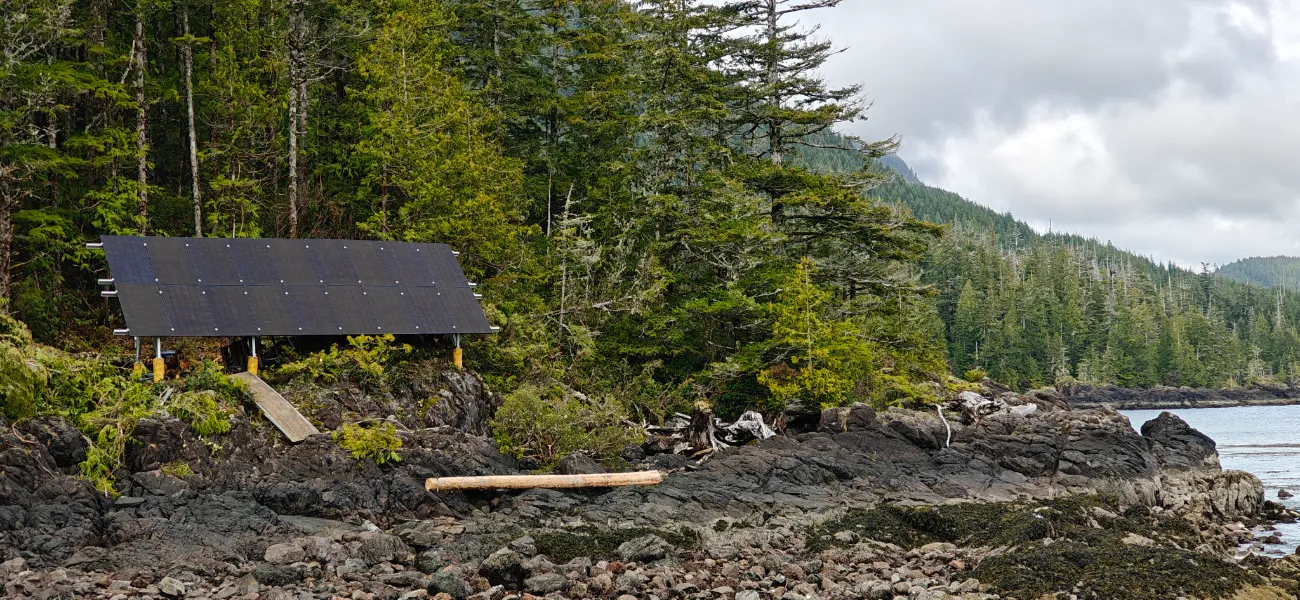
Can Solar Power Work Year-Round on the BC Coast?
If you live on the BC coast or you're planning to build a cabin or homestead here, you're probably wondering if solar power is reliable enough to handle our long, dark, rainy winters.
It’s a fair question. Between the cloud cover, short daylight hours, and dense forests, it’s not exactly textbook solar country. But the truth is: yes, solar power can absolutely work year-round on the BC coast, if the system is designed correctly for your site and your lifestyle.
Let’s walk through what makes that possible.
Understanding sunlight on the BC coast
Coastal British Columbia sees a lot of weather. From October through March, it’s not uncommon to go several days without direct sun, especially on the west coast of Vancouver Island or in places like Bella Bella, Port Hardy, or Cortes Island.
But even on overcast days, solar panels still generate power. The key metric to focus on is peak sun hours, a standardized way to estimate solar production.
-
- In winter, most coastal areas get 2 to 4 peak sun hours per day.
- In summer, you might get 5 to 6 hours or more.
That’s a big seasonal swing. So, to have a solar system that truly works year-round, it needs to be built for your worst-case scenario, not your best.
What makes a solar system reliable in all seasons?
Reliability isn’t just about installing some panels and calling it done. It’s about designing a complete system that can keep up, even in January.
Here’s what that usually means:
-
- Oversizing your solar array to account for lower winter production
- A large enough battery bank to store energy through low-sun periods
- Smart backup options, like a propane or diesel generator
- Efficient appliances and lighting to reduce demand where possible
If your system works during the darkest months on the BC coast, it will easily handle the rest of the year. At Kingsley Power, we always design with the off-season in mind.
Ground mount vs. roof mount for coastal properties
How you mount your solar panels matters—especially in off-grid coastal settings.
Roof-mounted systems
-
- Pros: Save space, easier to install if the roof is ideal
- Cons: Fixed tilt, limited panel count, harder to access for cleaning or snow removal
Ground-mounted systems
-
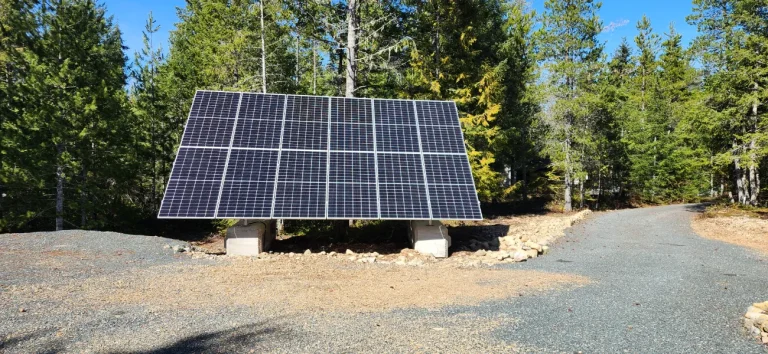
- Pros: Adjustable tilt, easier maintenance, better orientation and sun exposure
- Cons: Requires cleared space and groundwork, more materials to anchor in wet or rocky soils
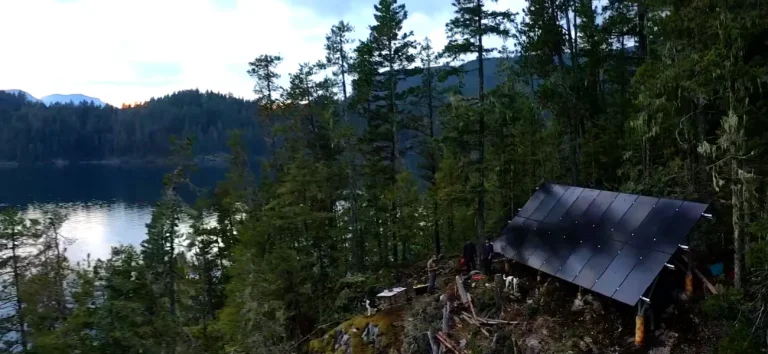
In remote or forested areas, a ground-mounted system often outperforms a roof-mounted one, simply because it can be aimed exactly where the sun hits, without being limited by roof angle or shading.
Site access and installation in remote areas
Many coastal cabins and island properties are off-grid not just in power, but in access. Roads may be seasonal, and marine access is often the only option.
That’s why logistics and installation planning are just as important as design.
At Kingsley Power, we:
-
- Conduct site assessments with terrain, exposure, and access in mind
- Transport equipment using our own 36-foot aluminum catamaran
- Install systems in rugged, weather-exposed, hard-to-reach locations across the coast
Whether your property is on a remote Gulf Island or tucked into a cove north of Bella Bella, we can get there, and get the job done right.
Choosing the right equipment for coastal conditions
Not all solar equipment is built for life near salt water and heavy rain. Here's what to look for:
-
- Solar panels with salt spray resistance and durable frames
- Aluminum or stainless steel racking systems to prevent corrosion
- MPPT charge controllers, which improve performance in cloudy or variable light
- Lithium batteries for cold-tolerant, high-efficiency storage
- Inverter/chargers that support generator integration
Also, if your batteries or inverter are exposed to coastal air, they’ll need to be housed in a well-sealed, ventilated enclosure to protect your investment.
Designing for seasonal performance
The most common mistake we see is sizing a solar system based on average or summer performance. That’s fine if you only use the cabin in July—but if you're living there full-time or visiting in the off-season, it won’t cut it.
Winter is the baseline. That’s when sun hours are at their lowest and energy demands (lighting, heating, cooking) are often at their highest.
Here’s what a system designed for year-round use typically includes:
-
- A solar array sized to produce 120–150% of your winter daily usage
- 2 to 3 days of battery storage capacity, or more depending on lifestyle
- A propane or diesel generator as a backup energy source
- Monitoring tools to help you track performance and catch issues before they become problems
Example scenario: Quadra Island cabin
Let’s say you’ve built a remote-access cabin on Quadra Island and plan to live there year-round. You estimate daily winter usage at 2.5 kWh (2,500Wh).
Here’s how your system might look:
-
- A 1,200W ground-mounted solar array, angled for winter sun
- A 10kWh lithium battery bank for storage and autonomy
- A 3kW hybrid inverter with generator input
- A 4kW propane generator for backup during extended cloudy stretches
This type of system wouldn’t just “get by” in January, it would provide enough reliable power to run essentials with some breathing room.
Final thoughts: Solar works here—but design is everything
The short answer is yes, solar absolutely works year-round on the BC coast. But it only works well when it’s built for your unique property, usage patterns, and environment.
Cutting corners on system size or equipment is what leads to frustration and mid-winter blackouts. A properly built system, on the other hand, will give you peace of mind for years to come.
That’s what we do at Kingsley Power. We design and deliver off-grid power systems that work—because they have to.
Why choose Kingsley Power?
We’re more than just solar installers, we’re off-grid problem-solvers. When you work with Kingsley Power, you get:
-
- A licensed electrical contractor with experience in remote and coastal installations
- Direct service to hard-to-reach areas via our marine transport vessel
- Equipment selected specifically for coastal BC conditions
- Real-world system designs that are proven to perform through storms, snow, and long stretches of rain
Proudly Serving Coastal and Island Communities
-
- Vancouver Island
- Gulf Islands
- Sunshine Coast
- Bella Bella and the Central Coast
- Discovery Islands
- Off-grid homesteads and First Nations communities
Ready to power your cabin or island home year-round?
Get in touch with Kingsley Power for a custom solar system that’s built to last through BC’s wettest, darkest, stormiest months—without leaving you in the dark.