From Wiring a Building to Building a Remote Power Plant
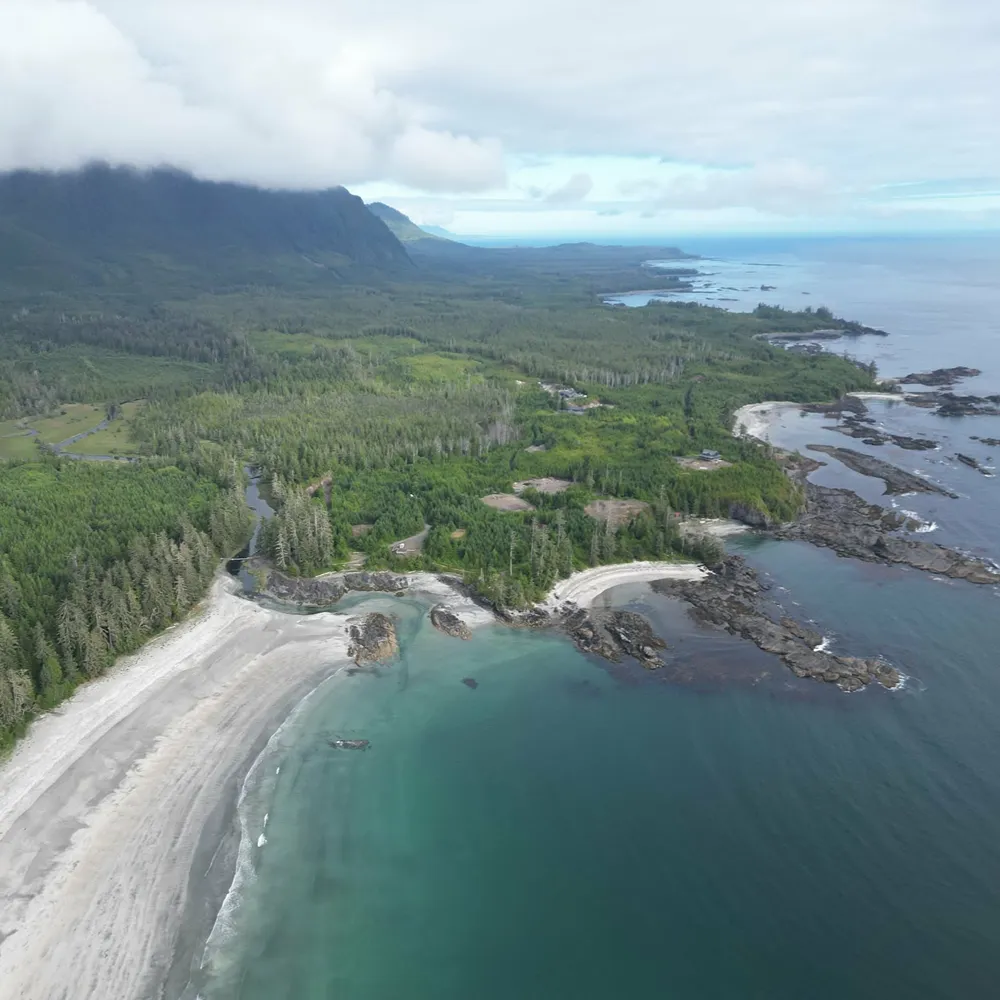
Kingsley Power was originally brought to Kapoose Creek to complete the electrical installation for an approximately 7,000-square-foot biological research facility beside Rugged Point Provincial Park in Kyuquot Sound.
As construction progressed, the scope expanded considerably. What began as wiring the building evolved into completing and integrating virtually the site's entire off-grid power infrastructure, including approximately 49 kW of solar generation, 88 kWh of lithium battery storage, three-phase inverter power, diesel generation, automatic controls, fuel systems and electrical distribution.
Greg's background in industrial electrical work, generator maintenance and commissioning provided the foundation for approaching Kapoose as a complete operating system rather than a collection of individual components. The objective wasn't simply to install solar panels and batteries. It was to build a dependable remote power plant capable of supporting the research station year-round.
Kyuquot Sound, British Columbia
~49 kW Solar · 88 kWh Lithium Storage · Three-Phase Power · Diesel Backup · 7,000 Sq. Ft. Research Facility

Building 49 kW of Solar Without Road Access
The station's primary solar array consists of 108 × 455-watt photovoltaic modules, providing approximately 49 kW of installed solar capacity.
Building an array of this size at a boat-access-only property required considerably more planning than a conventional commercial ground-mount installation. Materials, machinery and equipment all had to reach the property by boat or barge.
The exposed coastal location created another challenge: reliable site-specific wind data wasn't available.
Rather than designing around uncertain assumptions, the ground-mount foundation and ballasting system was intentionally built with a substantial safety margin.
Concrete was mixed and poured on site. Where practical, large natural rocks and existing rock formations were incorporated into the foundation system to reduce the amount of concrete that needed to be transported to the property.
Reinforcing steel was drilled and epoxied directly into the rock and tied into the reinforcement within the poured concrete, creating a substantial interconnected foundation for the solar racking.
A Three-Phase Off-Grid Power Plant
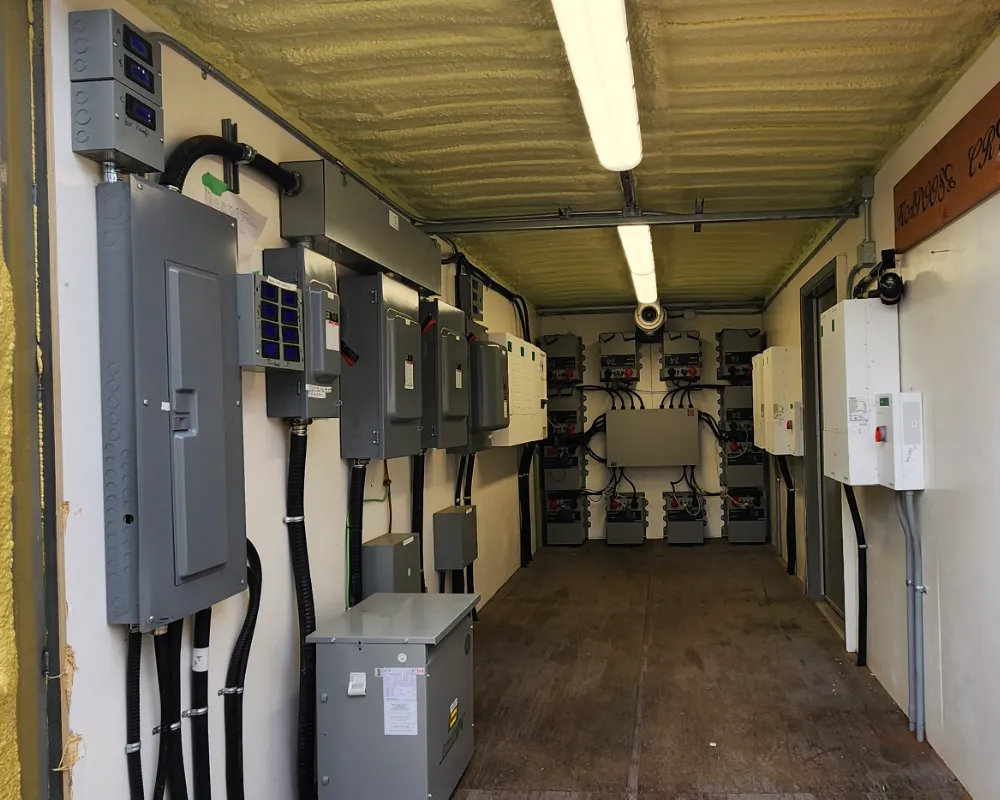
The central power system was installed inside a dedicated power sea container, which serves as the station's electrical and power-generation building.
The system combines:
-
- 3 × Schneider XW 6.8 kW inverter/chargers
- 88 kWh lithium battery storage
- Approximately 49 kW of photovoltaic generation
- Automatic diesel-generator backup
- Three-phase electrical distribution
The three Schneider inverter/chargers operate together as a three-phase system, allowing substantial facility loads to operate from solar and stored battery energy while retaining diesel generation for backup.
The system was designed around how the research station actually operates rather than simply maximizing renewable generation.
Solar, battery storage and diesel generation each have a role in keeping the facility operating through changing electrical loads, weather and seasonal conditions.

Diesel Generation Is More Than the Generator
At an isolated facility, standby generation needs to work when it's actually needed.
The station's existing diesel generators were upgraded with Dynagen automatic-start controls and integrated into the overall power system so generator operation could occur automatically when required.
But generator reliability doesn't stop at electrical controls.
Kingsley Power's work also included:
Diesel fuel plumbing · Primary and secondary filtration · Water separation · Fuel polishing · Generator controls · Ongoing fuel-system improvements
Fuel may remain in storage for extended periods at a remote facility. Water, contamination and fuel degradation can eventually become just as important to reliability as the generator itself.
A standby generator has little value if fuel or maintenance problems prevent it from starting when it's needed.
That's why the generators, controls, fuel storage and filtration are treated as components of the same power system.
From the Research Lab to the Power Plant
One of the things that makes Kapoose unusual is that Kingsley Power wasn't responsible only for the generation equipment.
Greg also completed the electrical installation throughout the approximately 7,000-square-foot research facility.
That meant the project could be considered from both ends:
-
- Research Equipment & Building Loads
- Electrical Distribution
- Three-Phase Inverters
- Battery Storage
- Solar Generation + Diesel Backup
Being involved with both the building and its power source meant the system could be commissioned around how the facility actually operates, rather than relying solely on equipment nameplates and theoretical load calculations.


Remote Projects Change the Way You Design
At a conventional commercial project, a forgotten fitting, failed component or unexpected problem might mean a quick trip to a supplier.
At Kapoose Creek, virtually everything arrives by boat or barge.
That changes the priorities.
Transportation, equipment selection, redundancy, controls, fuel quality, spare parts, serviceability and future maintenance all need to be considered before equipment reaches the property.
Heavy machinery also had to be barged to the site for excavation, material handling and construction. Experience gained on projects like Kapoose eventually led Kingsley Power to acquire its own backhoe, adding another capability for difficult remote-access projects.
The goal isn't simply to get equipment installed. It's to build a system that can continue operating and be serviced in the environment where it actually lives.
Years of Operation Change How You Design the Next System
Kingsley Power's involvement with Kapoose didn't end when construction was finished.
Greg continues to serve as the site's on-site maintenance manager, overseeing electrical, power-generation and supporting infrastructure as the research station continues to operate and evolve.
That long-term involvement provides something that designing and commissioning a system alone can't provide: years of direct feedback from operating, maintaining, troubleshooting and improving the same equipment.
Greg sees which components perform well, where maintenance issues develop, what fails and which design decisions make equipment easier to service years later.
Those lessons now influence how Kingsley Power approaches new remote systems, with particular emphasis on:
Reliability · Serviceability · Redundancy · Monitoring · Maintainability · Long-Term Operation

Technology Changes. The Lessons Remain.
The renewable-energy industry has changed considerably since Kapoose was originally built. Solar modules and lithium storage have become less expensive, battery capacities have increased and newer control and power-conversion options are now available.
The Schneider XW platform installed at Kapoose is also no longer the platform Kingsley Power would necessarily select for a new project today.
Kapoose isn't being presented as a blueprint for what Greg would install in 2026. It's a long-running operating system that has given him years of practical experience.
The equipment evolves. The fundamentals of designing a reliable, serviceable remote power system don't.
A Defining Kingsley Power Project
Kapoose Creek became a turning point for Kingsley Power.
What began as a contract to wire a research facility expanded into responsibility for virtually the entire electrical and energy infrastructure of the property.
The project brought together industrial electrical work, solar generation, lithium battery storage, three-phase power, diesel generation, automatic controls, fuel systems, heavy equipment and remote construction in one integrated installation.
It remains the largest solar installation Kingsley Power has completed to date, and years later Greg continues to maintain, support and improve the facility as its requirements evolve.
Kapoose Creek wasn't simply a solar installation. It was the construction of a complete remote power plant.

Complex Remote Systems Start With Proper Planning
Projects like Kapoose Creek demonstrate why remote power systems need to be considered as a whole. Site access, electrical loads, generation, battery storage, backup power, controls and long-term serviceability all influence how the system should be designed.
The assessment is the first phase of the project. If Kingsley Power is retained to supply and build the resulting system, the assessment fee can be applied toward the project.