Off-Grid Power Solutions For Remote Boat Access Properties
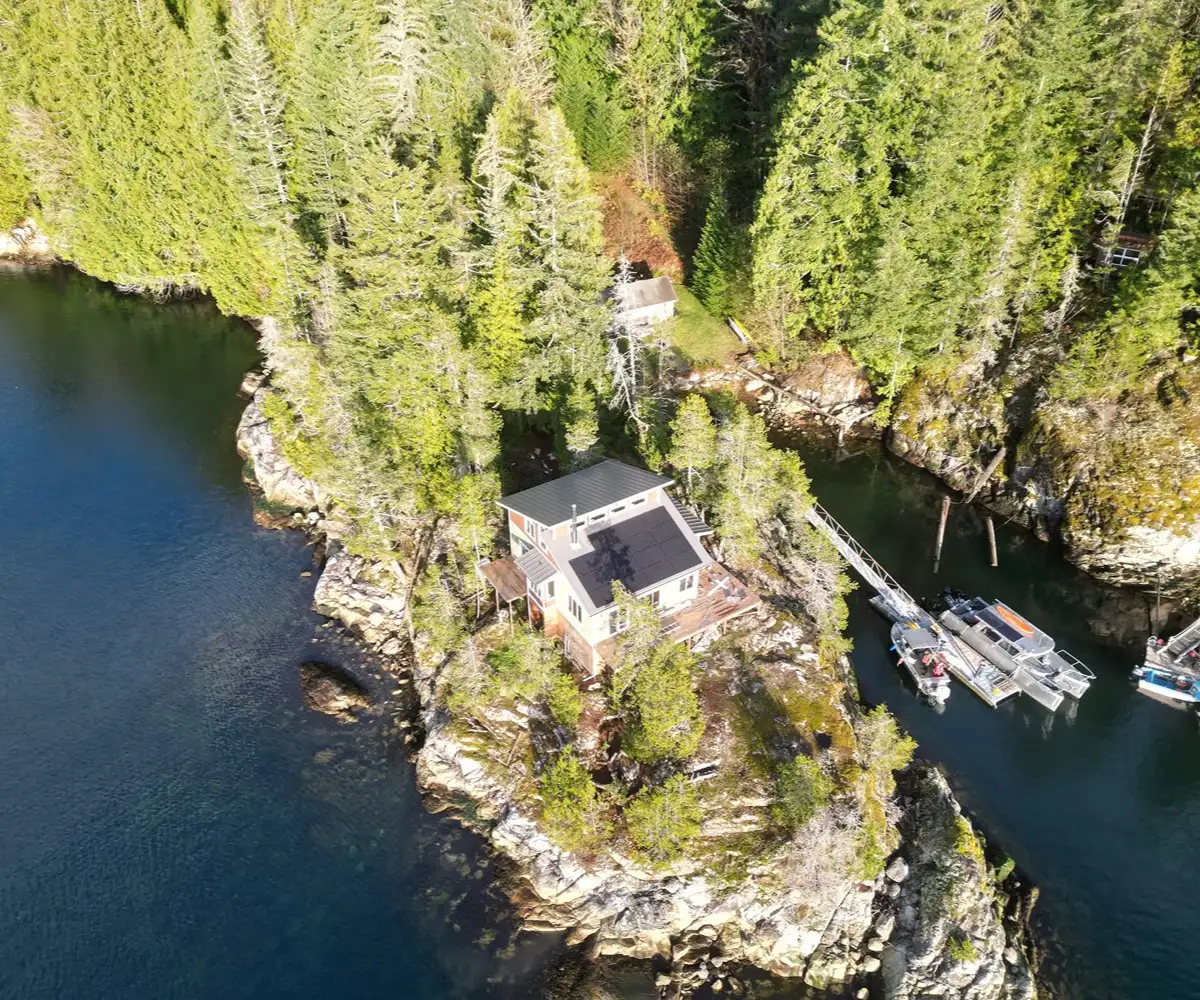
This boat-access cabin on Sonora Island, British Columbia was designed around a straightforward objective: create a reliable and comfortable off-grid property using solar energy as the primary power source while keeping generator use to a minimum.
Achieving that required more than installing solar panels, batteries and an inverter.
With no road access to the property, equipment had to be selected not only for performance, but also for transportation, installation and long-term serviceability. Major components, tools and materials were transported by truck and aboard Kingsley Power's 36-foot aluminum work boat before making the final trip from the dock to the cabin.
The completed system combines 7.5 kW of solar generation, 16 kWh of lithium battery storage, Victron power equipment, a DC-powered heat pump, generator backup, remote monitoring and wireless communications into one integrated off-grid system.
For remote properties, logistics aren't separate from system design. They're part of it.

Designing the Cabin Around Solar Power
The cabin has excellent southern exposure, providing an important advantage for both photovoltaic production and the passive-solar characteristics of the building.
Rather than relying heavily on generator power, the electrical system was designed to make effective use of the renewable energy available at the property.
The overall approach combines:
- Solar as the primary electrical energy source
- Lithium battery storage
- Efficient inverter/charger equipment
- Direct-DC operation for a major heating and cooling load
- Passive solar gain from the building itself
- Generator backup for prolonged poor weather
- Remote monitoring and communications
This allows the cabin to provide a high level of comfort without requiring an unnecessarily large generator or oversized electrical system.
7.5 kW Solar Array
The primary energy source is a 7.5 kW photovoltaic array consisting of fifteen 500-watt solar modules.
The modules are installed directly on the cabin's metal roof using S-51 direct-attach clamps and a rail-less mounting system.
Eliminating conventional mounting rails reduces material, weight and unnecessary hardware while providing a clean installation well suited to the roof.
Solar production is managed by a Victron SmartSolar MPPT 250/100 charge controller, which supplies renewable energy to the 48-volt battery system.
The cabin's strong southern exposure helps maximize photovoltaic production while simultaneously contributing passive solar heat to the building during sunny conditions.


Victron Power System & Lithium Storage
Energy storage is provided by a 16 kWh RUiXU lithium battery connected to a Victron MultiPlus 5000 inverter/charger.
The DC side of the installation incorporates a MidNite Solar distribution and protection system, bringing the battery, inverter, charge controller and associated equipment together into an organized electrical system.
A Victron Cerbo GX provides monitoring and communications for the installation.
This allows important operating information such as solar production, battery condition and electrical consumption to be viewed locally or remotely.
For a boat-access property, that visibility is particularly valuable. Understanding what the system is doing before travelling to the property can help identify operating issues and potentially avoid unnecessary service trips.
Taking a Major Heating Load Off the Inverter
One of the more interesting design decisions on this project involved the cabin's heating and cooling system.
An 18,000 BTU EcoSolaris heat pump is powered directly from the DC battery system rather than being supplied with AC power through the Victron MultiPlus.
That distinction matters.
In a conventional configuration, battery energy would first pass through the inverter to be converted from DC to AC before supplying the heat pump. By operating the heat pump directly from the battery system, that additional conversion step is avoided.
This provides two useful benefits:
-
- Reduces the electrical load placed on the MultiPlus inverter
- Eliminates some of the conversion losses associated with supplying the load through an AC inverter
The Victron monitoring system still provides visibility into the DC consumption. During operation, one project monitoring screenshot shows approximately 1,306 watts of DC consumption while the heat pump is running.
Rather than increasing inverter capacity simply to accommodate a large heating load, the system reduces the work the inverter needs to perform in the first place.
That is an example of looking at the property as a complete energy system rather than sizing every component independently.


Passive Solar & Efficient Heating
The electrical system also benefits from the design of the cabin itself.
Its strong southern exposure provides substantial passive solar gain during sunny weather. Those conditions also correspond with periods when the photovoltaic array is producing significant electrical energy.
The combination of:
-
- Passive solar heating
- An efficient heat pump
- Direct DC operation
- Lithium battery storage
- Strong photovoltaic production
- helps reduce the overall burden placed on the electrical system.
Some of the project photographs were taken while portions of the cabin were still under construction and before insulation had been completed. Even at that stage, the project demonstrated how building orientation and efficient mechanical equipment can complement off-grid power design.
Generator Backup Without Designing Around the Generator
A connection for a Honda EU2000 portable generator was incorporated for supplemental and emergency battery charging.
The generator is not intended to serve as the property's primary energy source.
Under normal conditions, solar generation and battery storage handle the cabin's electrical requirements. The portable generator provides an additional layer of redundancy during extended periods of poor weather or unusual energy demand.
This is particularly important on a boat-access property.
Every litre of generator fuel ultimately has to be transported to the island. Reducing generator runtime therefore provides practical benefits beyond simply reducing fuel cost.
It means less fuel transportation, less generator maintenance, less noise and less dependence on a combustion engine for everyday operation.


Remote Monitoring & Communications
Reliable communications have become an increasingly important part of modern remote infrastructure.
This project includes a Ubiquiti point-to-point wireless connection used to share internet connectivity between neighbouring properties.
The radio equipment is installed on a simple Unistrut structure, providing a durable and serviceable installation suited to the remote environment.
Internet connectivity gives the owners normal communications while also supporting remote access to the Victron monitoring system.
For Kingsley Power, communications and power infrastructure increasingly work together. Reliable network connectivity can make it possible to monitor equipment, diagnose problems and understand system conditions without immediately travelling to a remote property.
Designing the Entire Property as a System
Successful off-grid design isn't simply a matter of adding more batteries or installing more solar panels. Every significant electrical load influences the rest of the system.
A large pump may affect inverter sizing. Heating can influence battery capacity. Battery capacity affects generator runtime. Renewable production affects charging requirements. Communications can determine whether equipment can be diagnosed remotely.
For that reason, Kingsley Power approaches remote properties as complete energy systems.
At this Sonora Island cabin, the design considered:
-
- Building orientation
- Passive solar gain
- Photovoltaic production
- Battery storage
- Inverter capacity
- Direct DC loads
- Heating and cooling
- Generator backup
- Monitoring
- Communications
- Remote access and serviceability
Running the heat pump directly from the battery system is a good example of that approach.
Instead of simply installing a larger inverter to accommodate another substantial AC load, the design reduces the work the inverter needs to perform.
The result is a relatively straightforward off-grid system capable of providing a high level of comfort without requiring excessive battery storage, an oversized inverter or a large generator.

Remote Access Is Part of the Project
Getting equipment to a remote property can be as significant a challenge as installing it.
For this project, Kingsley Power handled transportation of the major equipment using its own truck and 36-foot aluminum work boat.
Heavy components were mechanically loaded aboard the vessel before departure. At Sonora Island, the equipment then had to be unloaded at the dock and moved into the property.
Project photographs document this process, including the battery being loaded onto the boat, transported up the dock ramp and ultimately delivered to the cabin.
This capability allows Kingsley Power to handle more of a remote project directly, including:
-
- Equipment procurement
- Transportation
- Site logistics
- Electrical installation
- System integration
- Commissioning
- Remote monitoring
- Ongoing service
For the property owner, that reduces the need to coordinate separate transportation providers, equipment suppliers and contractors simply to get a system installed.
An Ongoing Remote Property Project
Kingsley Power's involvement with the property has continued beyond the original electrical installation.
Future work is planned around the cabin's water system and additional property infrastructure.
That continuity can be particularly valuable on remote properties.
As new systems are added, the person designing them already understands the existing electrical infrastructure, site conditions, equipment and the reasoning behind the original system design.
Instead of treating power, water, communications and other infrastructure as completely independent projects, each can be considered within the context of how the overall property operates.
Start With a Power System Designed Around the Property
The Sonora Island project demonstrates how solar production, battery storage, heating, generator backup, communications and even site access can influence off-grid system design. Kingsley Power starts by understanding how the property will actually operate before recommending equipment.
The assessment is the first phase of designing the right system. If Kingsley Power is retained to supply and build the resulting system, the assessment fee can be applied toward the project.