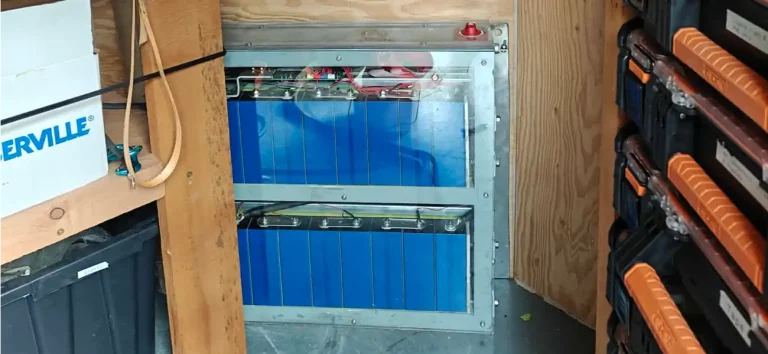
The Inverter Setup the Rule Followers Will Hate
Hopefully I piss off the rule followers with this one
I’ve been running European 230-volt Victron inverters on North American 120/240-volt systems, and in the right application they can be cheaper, lighter, simpler and in some ways more capable than the equipment we’re “supposed” to use here.
Yes, I know. It doesnt have that magical sticker on it saying im “allowed”
Fuck me, call the electrical police.
I’m not arguing that permits, inspections and equipment approvals don’t exist. I’m saying something much simpler: code compliance and good engineering are not the same fucking thing.
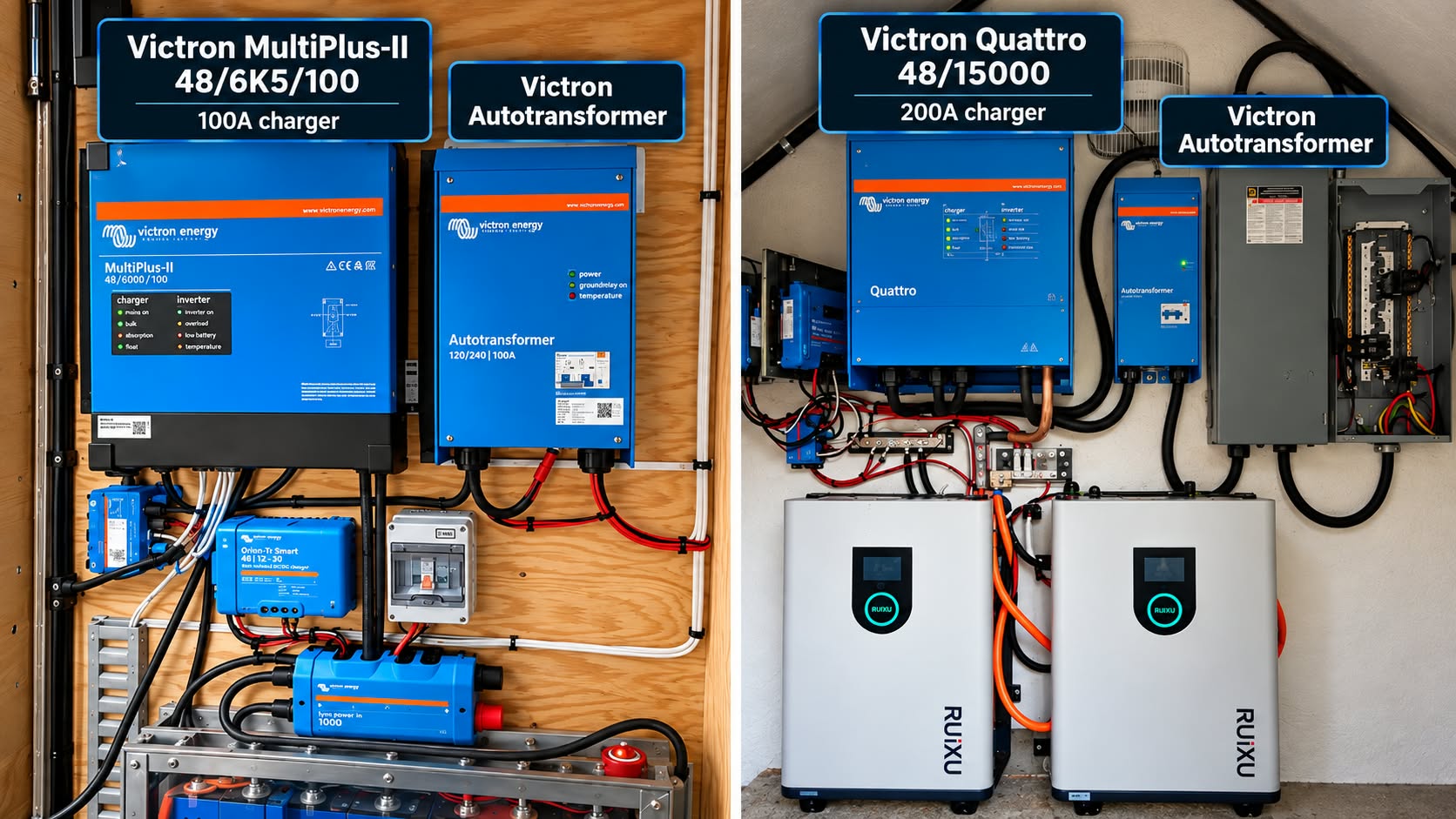
I’ve got a European Quattro 15,000 on Sonora Island running an entire fabrication shop. Welders, tools, serious loads. It’s an absolute beast.
I’ve also got one of Victron’s newer 6K5 units in my mobile work trailer, feeding a North American 120/240-volt system through a large autotransformer.
And after actually using these systems instead of just reading rule books and datasheets, I think there are some very good reasons more people should understand this architecture.
So Why The Hell Would I Do This?
Because there are actual engineering advantages here. This isn’t about being different for the sake of being different. In some applications I can get more useful inverter capacity, better load sharing, less hardware, lower cost and the best control interface I’ve found in the industry.
The biggest reason is flexibility. I’m not trying to force every job into whatever all-in-one inverter happens to be sitting on the wholesaler’s shelf.
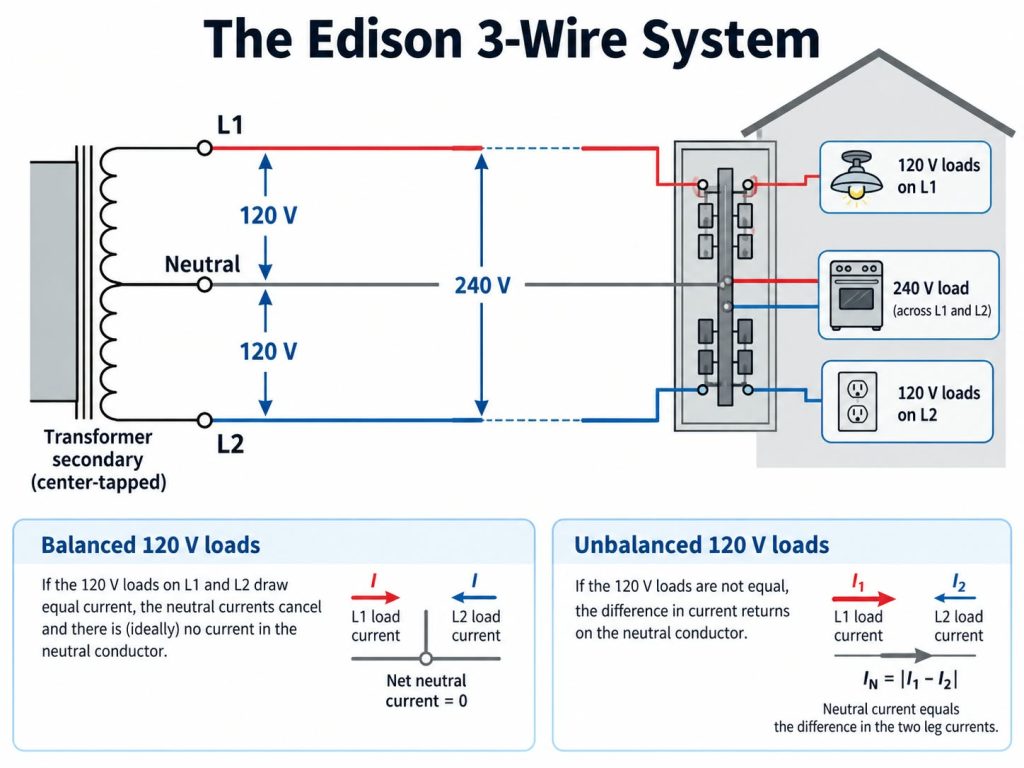
A big 230/240-volt Victron gives me one common pool of inverter power. Add a properly sized autotransformer and I can turn that into North American 120/240-volt split phase while letting the transformer deal with a huge amount of leg imbalance.
That matters in the real world. Houses, shops and cabins are almost never perfectly balanced. One leg might have a compressor, microwave and a pile of receptacle loads on it while the other leg is barely doing anything. With the European Victron setup, I’m not artificially dividing the inverter capacity in half and hoping the loads cooperate.
The inverter makes the power. The autotransformer deals with our goofy North American split-phase system.
And then there’s Victron itself. Their interface, remote monitoring and system control are still the best I’ve used. Cerbo GX, VRM, PowerAssist, ESS, generator control and Node-RED give me the ability to actually engineer how the system operates instead of just installing a box and accepting whatever the manufacturer decided I was allowed to configure.
One Big Pool Of Power
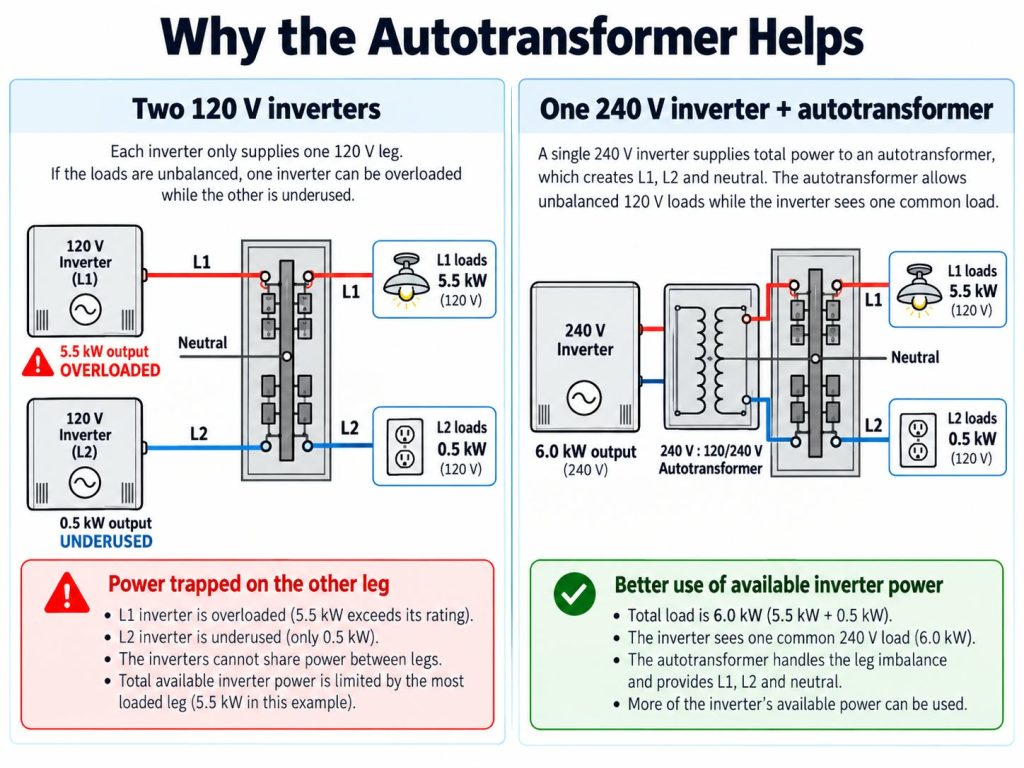
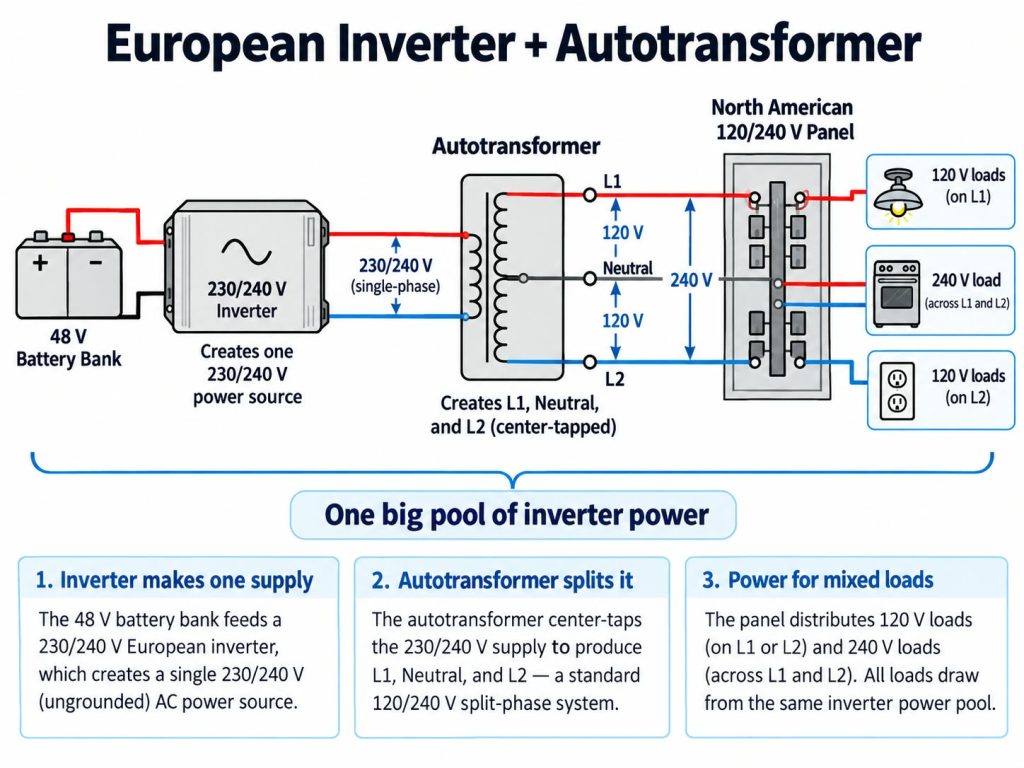
To be fair, two separate 120 V inverters aren’t the only way to get split phase. Magnum built split-phase inverter/chargers with the transformer and centre tap inside the inverter, so you could get 120/240 V from one box. Schneider’s old XW did essentially the same thing. Those are good architectures — I’m not pretending Victron invented the idea.
What I like about the European Victron approach is that it separates the jobs: one big inverter makes the power, and an external autotransformer creates the North American split phase. Then I still get Victron’s interface, controls and ecosystem.
More Power, Less Crap on the Wall
Victron’s newer European 4K5 and 6K5 units use aluminum windings and are considerably lighter for the amount of power they produce. My 6K5 weighs roughly the same as — actually a little less than — a North American 5 kVA MultiPlus-II, while giving me considerably more continuous output.
Yes, I have to add an autotransformer, so some of that weight comes back. In a stationary installation I honestly don’t give a shit. In my mobile work trailer, though, weight matters, and getting this much inverter capacity without hanging two big inverter/chargers on the wall is a real advantage.
The price is hard to ignore too. My 6K5 cost roughly $1,300, plus the autotransformer. Compare that with buying multiple North American Victrons to get similar usable split-phase capacity and the European setup starts looking pretty fucking attractive.
Idle consumption matters too, especially off-grid. I measured my 6K5 at about 29 watts, and roughly 35 watts with the autotransformer energized. A pair of North American MultiPlus 5000s I measured came in around 43 watts combined. So the 6K5 setup does use a little less power sitting there, but once you account for the greater total inverter capacity of the twin 5000s, they’re really in the same ballpark. The important part is that adding the autotransformer doesn’t create some huge standby penalty.
Does It Actually Work?
Ive already done this at both ends of the scale
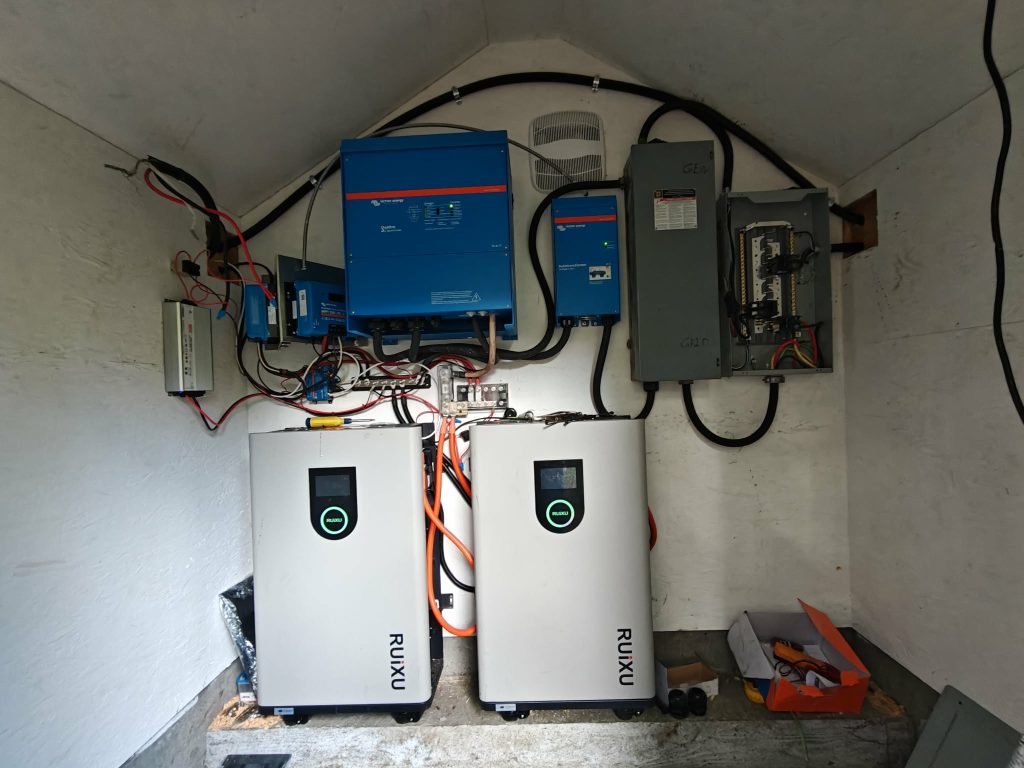
On Sonora Island I installed a European Victron Quattro 15,000 that runs an entire fabrication shop. Welders, compressors, power tools — serious loads. The thing is an absolute beast and feels more like a real electrical service than what most people picture when they hear “battery inverter.”
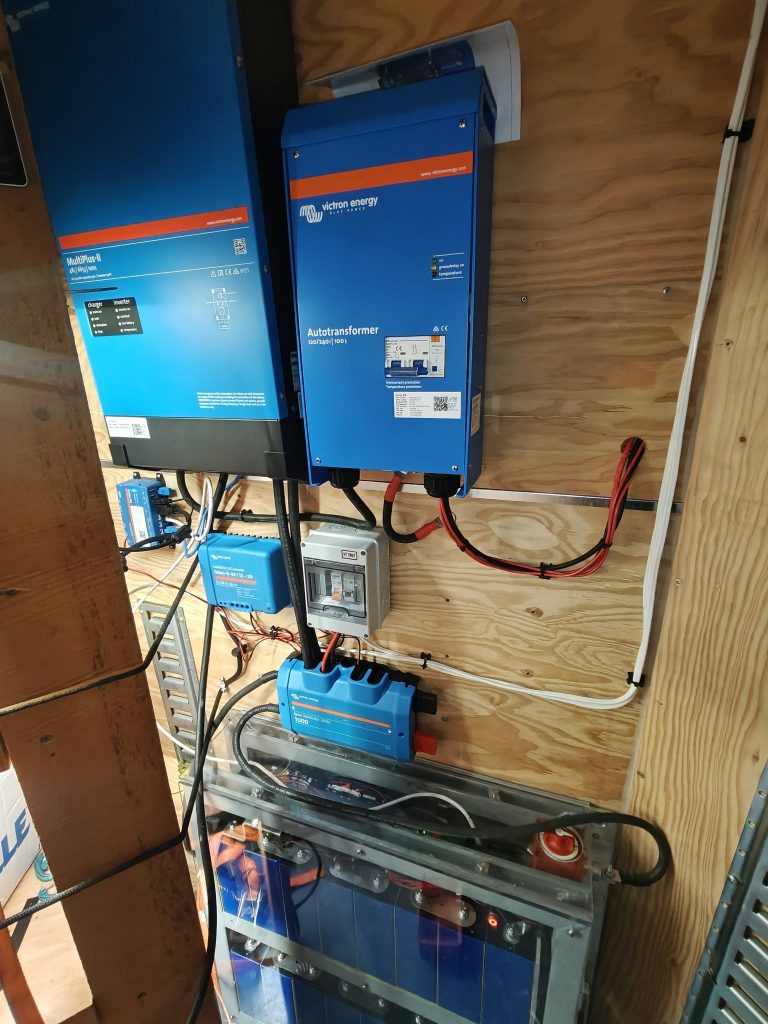
My mobile work trailer is the smaller test. The 6K5 feeds a North American 120/240 V system through the autotransformer. I’ve run my Miller 211 welder as high as it’ll go, then added a 1,500-watt heater on one 120 V leg to deliberately unbalance the system, and seen battery-side current spike to nearly 200 amps. This setup isn’t finished yet — I’ve temporarily landed everything at the autotransformer while I finalize the permanent wiring.
So Why Isn’t Everyone Doing This?
Because the electrical industry doesn’t choose equipment on engineering merit alone. Manufacturers want products that are easy to certify and sell, wholesalers want products they can stock and push, and contractors want systems their employees can install quickly without having to understand every fucking detail.
Then everybody starts feeding everybody else. The manufacturer trains the distributor, the distributor pushes the contractor, the contractor installs the same shit over and over, and the approval system rewards equipment that already fits neatly inside the box
It becomes one big fucking circle jerk.
And once that machine gets going, the question stops being “what is the best electrical architecture for this job?” and becomes “which approved box do we already know how to sell?”
The Sales Machine
This is the part of the industry that drives me fucking nuts.
I hate marketing, and i hate being “sold” shit by people who are supposed to be helping design electrical systems.
EG4 is probably the best example of what pisses me off. They make a handful of inverters, batteries, ChargeVerters, the GridBOSS, and related gear — and somehow there’s a fucking cult wrapped around the whole thing.
The equipment may work perfectly fine. Thats not the point.
The same mentality shows up all over the industry. Enphase has turned solar and storage into an ecosystem of microinverters, batteries, system controllers, combiners, gateways and installer software. APsystems sells the same basic promise from another direction: fewer components, faster installs, certified installers and a complete microinverter/storage solution. Growatt has gone balls-deep into hybrid and all-in-one equipment, with everything packaged around making the installation quick and repeatable. That isn’t me putting words in their mouths — these companies openly market simplified, pre-wired and fast-install architectures as selling points.
The Old Heavy Inverters Had a Point
Before everything went high-frequency and all-in-one, there were some seriously tough transformer-based machines out there. The Schneider XW6848, Magnum’s split-phase units and the old SMA Sunny Island all came from that school of thought.
They were heavy as hell, but they tolerated ugly loads, motor starts and imbalance extremely well.
My European Victron plus autotransformer setup reminds me a lot of that philosophy — except the jobs are separated. The inverter makes one big 240 V source, and the autotransformer creates the North American split phase.
Sometimes a big Fuck-off Transformer is still the right answer.
And Then There’s Code
Yes, I know these European units aren’t approved for North America.
And if I’m doing a permitted job, eventually the electrical police show up with the book and rule number.
So yes, follow the fucking rules Greg or apparently civilization will collapse.
But if your entire technical argument is “it’s not code compliant,” you’ve avoided the actual engineering discussion.
And that’s the whole point.